
Choose Your Fruit. Get Care Advice for Your Weather.
Select a fruit, enter a city or ZIP code, and open only the care sections you need.
Loading Oviedo weather…
Which fruit are you growing?
Select your fruit so every day of the forecast can give you care instructions for that specific plant.
Oviedo, Florida
This is an interactive weather map—not a decoration. Click anywhere to move the marker and instantly update the seven-day forecast and fruit-specific care advice. Use “Radar on/off” to view precipitation or the plain street map.
Giant Granadilla Vine Also known as Granadilla Gigante
Passiflora quadrangularisA vigorous tropical passion fruit vine with dramatic growth, beautiful flowers, and the potential to produce one of the world’s largest passion fruits.
- Excellent for strong trellises and arbors
- Flowers support pollinator activity
- Raised in our Central Florida greenhouses
Looking for passion fruit plants? Browse plants from our greenhouses and learn more about this week's featured plant.
🌱 View Giant Granadilla Vine & Browse Available Plants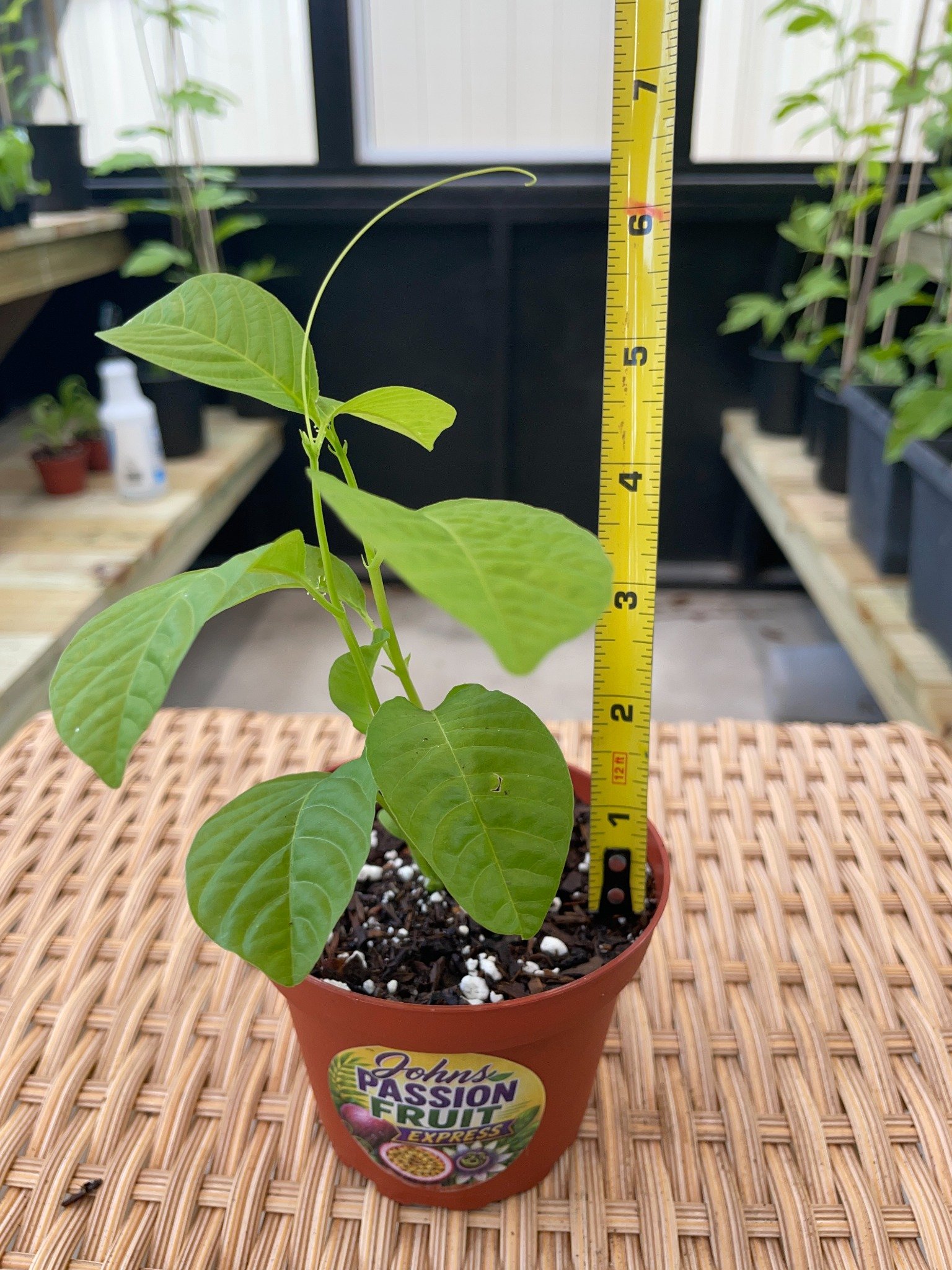
More from John's Passion Fruit Express
Ready to browse plants, learn more, or get in touch? Choose your next stop.
Passion Fruit Learning Center
Open a guide when you need it. Everything stays compact until selected.
Growing Passion Fruit in Central Florida
Plant in full sun with excellent drainage and a strong support already in place. Central Florida vines grow fastest from spring through fall, but young plants may need temporary afternoon protection during extreme heat.
- Keep the root zone evenly moist while establishing, without leaving it saturated.
- Mulch broadly, but keep mulch several inches away from the main stem.
- Feed in small, regular applications during active growth; reduce excess nitrogen as flowering begins.
- Protect young vines and exposed containers during unusual cold snaps.
- Before tropical weather, secure pots, ties, wires, and heavy lateral growth.
Giant Granadilla Vine Growing Guide
Giant Granadilla Vine (Passiflora quadrangularis) is a highly tropical passion fruit with very large leaves, flowers, vines, and fruit. It requires more room and stronger support than standard purple or yellow passion fruit.
- Use a heavy-duty trellis designed for a mature, fruit-loaded vine.
- Check moisture frequently in hot weather because the large leaves lose water quickly.
- Maintain excellent drainage and airflow during humid, rainy periods.
- Protect the vine from cool wind and temperatures well before frost.
- Hand pollination may improve fruit set when natural pollinator activity is limited.
How to Trellis Passion Fruit
Install the trellis before rapid growth begins. Train one or two main leaders upward, then guide productive laterals across the top support.
- Use rot-resistant posts, galvanized wire, or another durable support.
- Keep ties loose enough to avoid cutting into expanding stems.
- Redirect tendrils before they wrap around neighboring plants or weak objects.
- Thin tangled growth to improve light penetration and airflow.
- Inspect supports before storms and before fruit becomes heavy.
Pollinating Passion Fruit
Carpenter bees and other large pollinators can transfer pollen naturally, but some varieties set more reliably with hand pollination or compatible cross-pollination.
- Pollinate fresh, fully open flowers while pollen is dry and viable.
- Transfer pollen from the anthers onto all receptive stigma surfaces.
- Avoid pollinating during active rain or while flowers are soaked.
- Flower drop can also result from heat, water stress, poor nutrition, or incompatible pollen.
- Do not use broad insecticides while flowers and pollinators are active.
Common Passion Fruit Diseases
Good drainage, airflow, sanitation, and early inspection prevent many common problems. Disease symptoms can overlap, so severe or spreading issues may require diagnosis by a local Extension office or plant laboratory.
- Root and crown rot: often associated with saturated soil or poor drainage.
- Leaf spots and anthracnose: favored by warm, humid conditions and prolonged leaf wetness.
- Fusarium wilt: may cause progressive yellowing, wilting, and vascular discoloration.
- Viral symptoms: may include mosaic patterns, distortion, reduced vigor, and poor fruit quality.
- Remove diseased debris, disinfect tools, avoid splashing irrigation, and isolate suspicious new plants.
Plant size, drainage, shade, wind exposure, and recent watering can change what an individual plant needs.
Looking for passion fruit plants near Oviedo or Orlando?
John’s Passion Fruit Express is a Florida State Registered Nursery in Oviedo specializing in greenhouse-grown passion fruit plants. Explore local availability, Central Florida growing guidance, or current plants ready to ship or arrange for local pickup.